The consumer app stack is too fragmented
June 22, 2026 · 2 min read

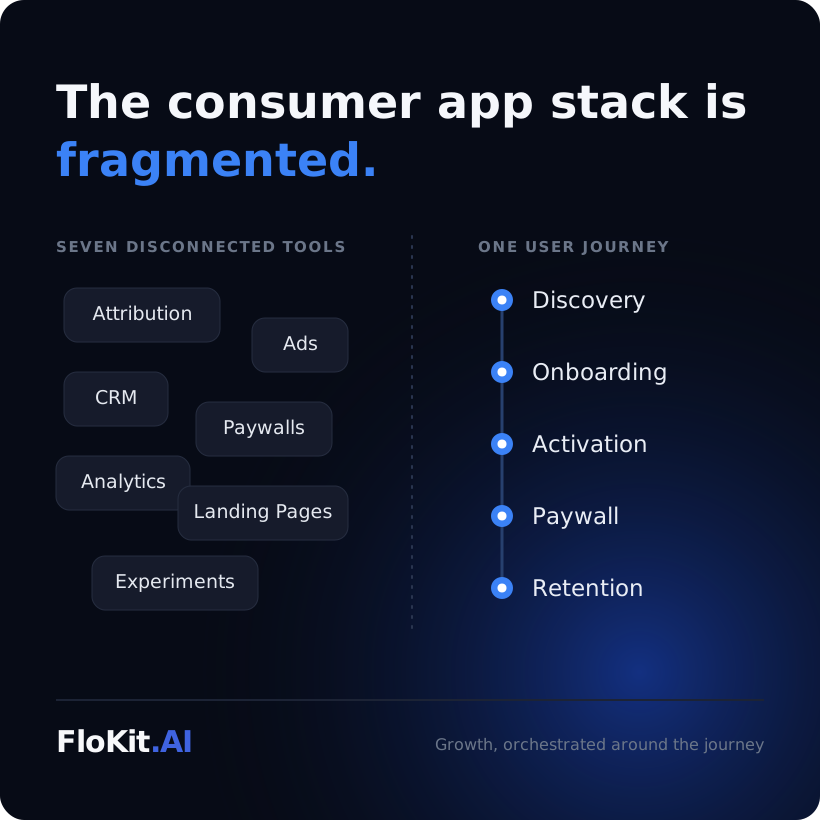
The consumer app stack is too fragmented.
One tool for attribution. One for paywalls. One for analytics. One for CRM. One for ads. One for landing pages. One for experiments. Each one is good at its slice, each one has its own dashboard, its own data model, and its own definition of what a "user" even is. Stitching them together has quietly become a full-time job, and the seams are where growth leaks out.
But the user does not experience "tools." The user experiences one journey. They discover the app, they onboard, they hit the moment the product clicks, they reach a paywall, they decide on a price, they stick around, or they do not. None of that maps cleanly onto the boxes your software is organized into.
That journey runs through discovery, onboarding, activation, conversion, pricing, retention, and reactivation. It is continuous. The handoffs between stages are where most of the value is won or lost, and those are exactly the handoffs no single tool in the stack can see. Your attribution tool does not know what your paywall did. Your paywall does not know what onboarding promised. Your CRM does not know why someone churned.
When the stack is fragmented, every team ends up optimizing its own metric in isolation. Acquisition chases installs. Lifecycle chases opens. Monetization chases conversion. Each one can win locally while the journey as a whole gets worse, because nobody owns the connective tissue between the stages.
FloKit.AI is built around one simple idea: growth should be orchestrated around the user journey, not around disconnected software categories.
That means treating discovery, funnels, conversion, monetization, and retention as one adaptive system with a shared view of the user, so an improvement in onboarding can inform the paywall, and a signal at the paywall can reshape acquisition. One journey, orchestrated end to end, instead of seven tools negotiating at the borders.